




Pott Sterling
Seven models. Two finishes. Available all year round.
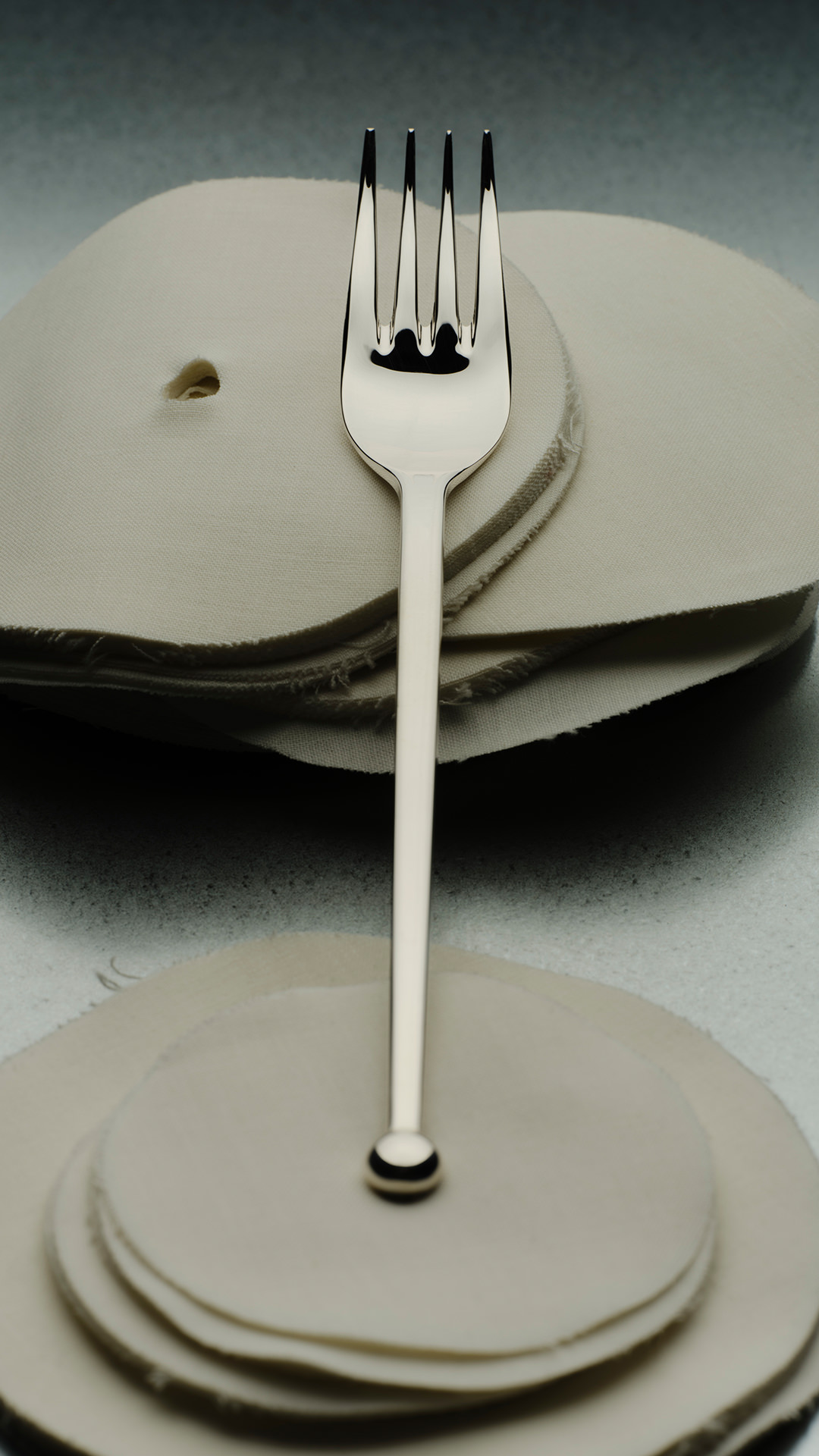
The Pott flatware range comprises a total of 19 models, seven of which are also or exclusively made from 925 sterling silver. Until now, Pott Sterling models were manufactured and delivered once a year in spring.
To ensure that silver can shine all year round at Pott in the future, all seven sterling silver models are now available to order and deliver without any time restrictions. What was previously only possible as a special order is now standard in the Pott Sterling portfolio: the matt brushed finish is permanently complemented by the mirror polished option.
With a total of 14 different sterling silver variants, Pott expresses its commitment to craftsmanship perfection. Throughout the year, Pott Sterling stands for silver flatware that is unique in the long history of cutlery culture thanks to its timeless and iconic design language.


History shaped into form
Pott flatware has a long history. Founded by Carl Hugo Pott in 1904 as a workshop for damascening cutlery, an epochal Pott flatware program emerged over the course of the 20th century, inspired by the clear, functional design language of the founder‘s son, Carl Pott.
The precious metal silver also has a long tradition in tableware. It appeared as table silverware as early as Greco-Roman antiquity, but it was not until the 16th century that cutlery in the form we are familiar with today was created. As a symbol of status and sophistication, it has accompanied the set table ever since – preserved in heirlooms, collections and fine craftsmanship.

From craftsmanship to cultural legacy
In 1932, at the age of 26, Carl Pott joined his father’s company, which until then had been working with various clients in the increasingly important Solingen cutlery industry. As the person responsible for the technical and artistic side of the business, he gradually shifted the company’s focus to the design and manufacture of its own flatware. With his designs from the 1930s, which were primarily made of rustproof steel, he laid the foundation for the Pott style and, as an outstanding flatware designer, established the brand’s reputation today.
In 1948, this design ethos was applied to the material silver for the first time: Pott 81, the brand’s first sterling silver cutlery, was launched on the market, the design of which Carl Pott had commissioned architect and industrial designer Hermann Gretsch to create back in 1941. In 1949, Pott received a request to furnish the official residence of the Federal President in Bonn, Villa Hammerschmidt, with Pott 81 in a version engraved with the Bundesadler (Federal Eagle).
In the following years, numerous other designs were created by Carl Pott and renowned leading designers of their time. The clear, functional design language shaped the aesthetics of the young German Federal Republic: Pott flatware found its way to Deutsche Lufthansa, the Olympic Village in Munich, the Cologne City Council‘s silverware, the Chancellor‘s bungalow in Bonn and numerous German embassies around the world. The award-winning cutlery is now part of international design collections and museums.


Masterful craftsmanship that lasts for generations
After the third generation of the Pott family business, it was initially unclear how the heritage brand would continue. Ultimately, the Seibel family, which has also maintained a successful tradition in handcrafted flatware production since 1895, took over the Pott legacy. Since 2006, they have been passionately ensuring the brand and products continue to thrive. Today, the flatware manufactory is located in neighbouring Mettmann, a few kilometers from its founding place in Solingen, where Pott flatware is manufactured by hand with uncompromising dedication and the highest standards of quality and form.
As modern as Pott flatware may appear, it is manufactured using traditional methods. Each piece is patiently crafted by hand using techniques that have been refined over generations: deburring, grinding, polishing, matting – step by step, with full attention to every detail, the raw material is transformed into a perfectly shaped piece of flatware. A spoon and a fork require over 30 steps, a knife more than 90 – an effort that guarantees quality and lasting durability.
The blades for Pott knives are traditionally forged and hardened by hand in Solingen from molybdenum-vanadium steel. During the ‘blue grinding’ process, the blade is finely ground to ensure exceptional rust resistance and a smooth surface that improves cutting quality. At our manufactory in Mettmann, the blade is inserted into the hollow handle filled with quartz sand and given its characteristic micro-serration, which guarantees exceptional sharpness.


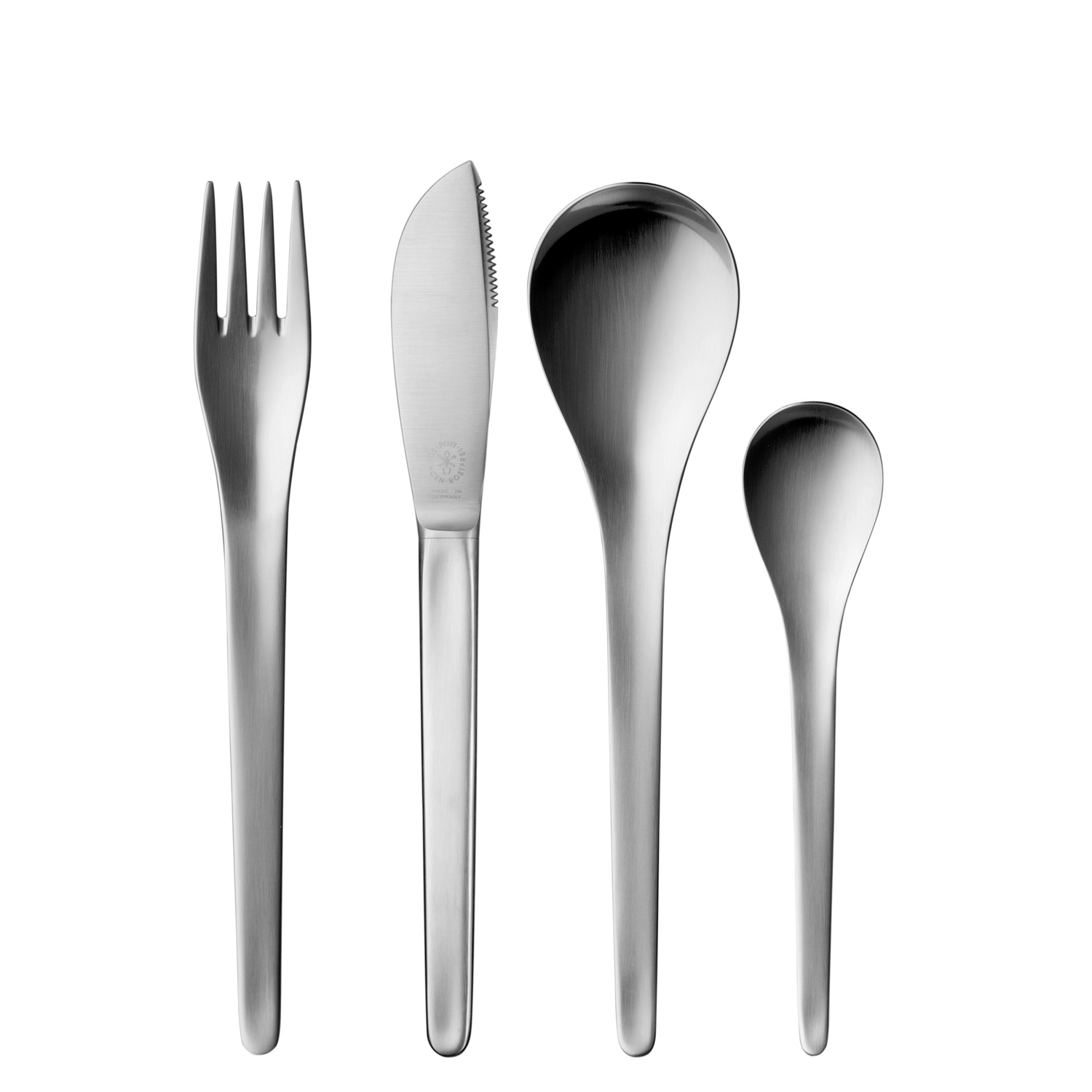
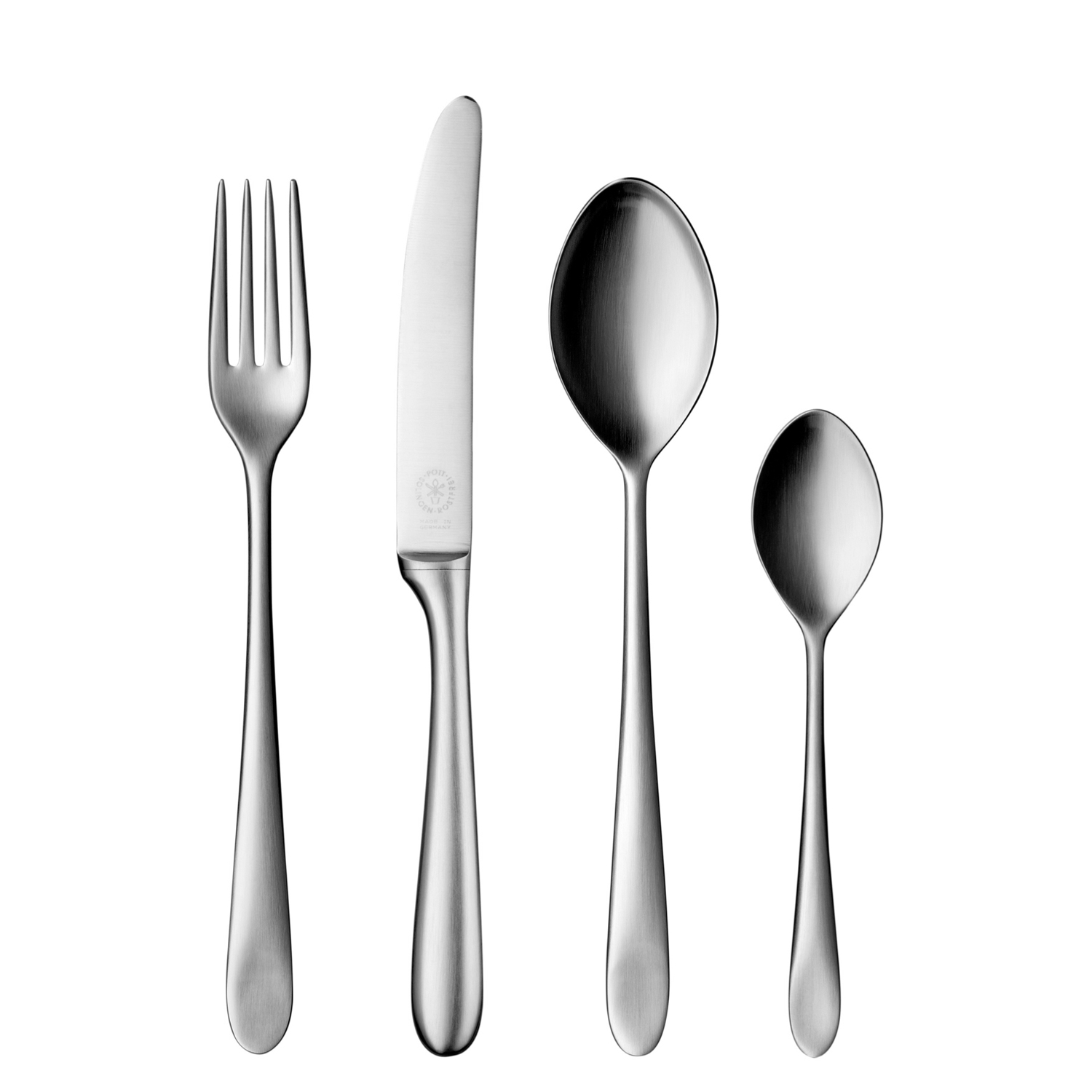
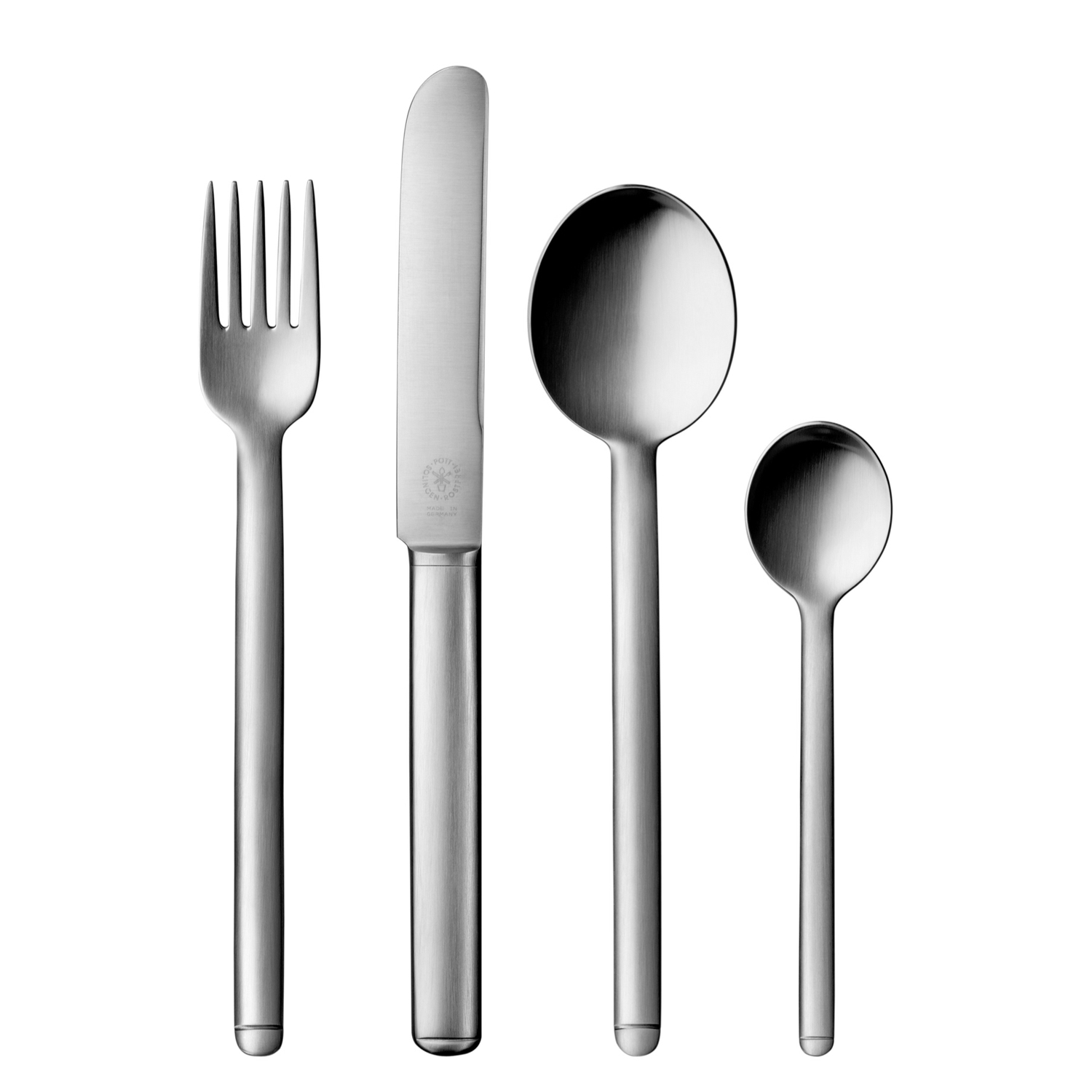
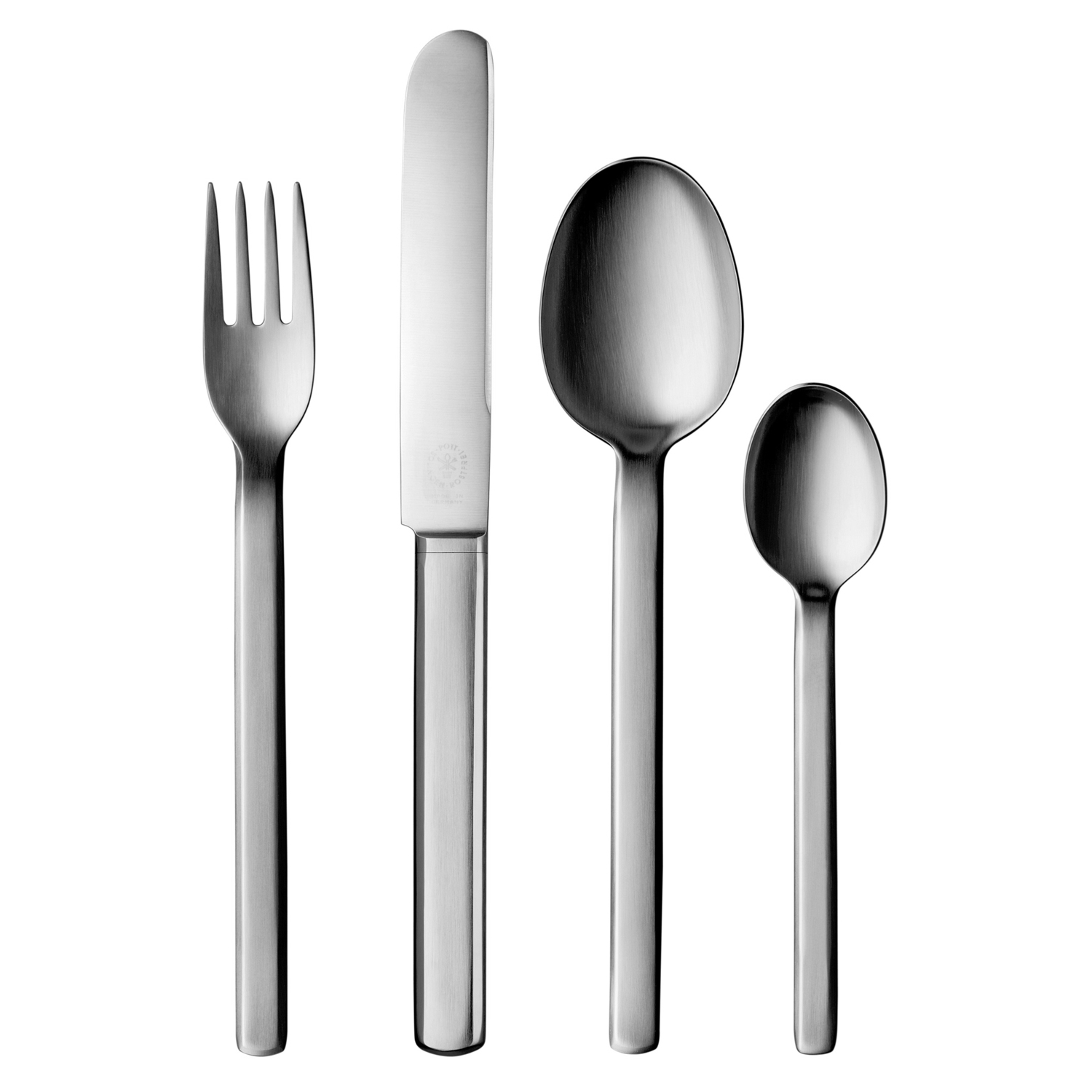
Discover seven Pott Sterling models in two finish options:
Typical for Pott is the breadth, in which almost all flatware series are available. From four piece place setting to butter knives, soup and serving spoons to dessert flatware, all the individual parts have the characteristic design features of their model.


